
Spinal Decompression Therapy
Non-Surgical Back and Neck Pain Treatment in Merrylands
Back pain can have a significant impact on daily life. For some people, it makes sitting at work uncomfortable. For others, it affects sleep, exercise, driving, or even simple activities such as walking, bending, or lifting. When symptoms continue despite rest or medication, many people begin looking for treatment options that address the underlying cause of their discomfort rather than simply masking the symptoms.
At Merrylands Rehab Centre, we offer Spinal Decompression Therapy as part of a comprehensive physiotherapy and rehabilitation program. This treatment is designed to gently reduce pressure on spinal structures, including the intervertebral discs, facet joints, and surrounding nerves, while helping improve mobility and function.
Spinal decompression is a non-surgical treatment that may assist patients experiencing persistent back pain, neck pain, sciatica, disc-related symptoms, and nerve irritation. It is commonly incorporated into broader rehabilitation programs alongside physiotherapy, exercise therapy, laser therapy, shockwave therapy, and other evidence-based treatments.
Understanding Spinal Compression
The spine is made up of bones called vertebrae, which are separated by discs that act as shock absorbers. These discs help distribute forces through the spine during movement and daily activities.
Over time, a combination of factors can place excessive stress on these structures, including:
- Prolonged sitting
- Poor posture
- Heavy lifting
- Repetitive bending
- Sporting injuries
- Workplace injuries
- Age-related degeneration
- Previous spinal trauma
When discs become compressed or irritated, they may place pressure on nearby nerves. This can result in symptoms such as:
- Lower back pain
- Neck pain
- Sciatica
- Leg pain
- Arm pain
- Tingling sensations
- Numbness
- Muscle weakness
- Reduced mobility
- Difficulty sitting or standing for prolonged periods
Many patients describe feeling stiff, restricted, or unable to perform activities they previously enjoyed.
What Is Spinal Decompression Therapy?
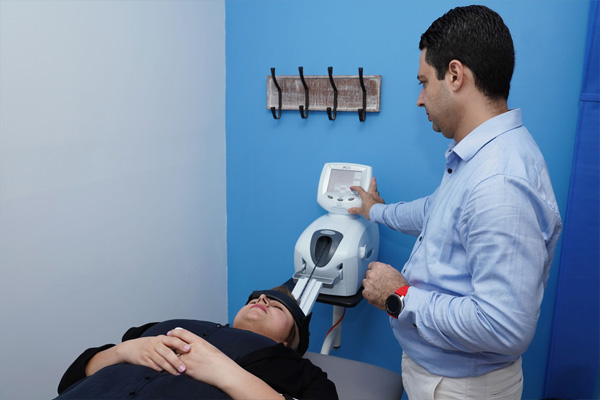
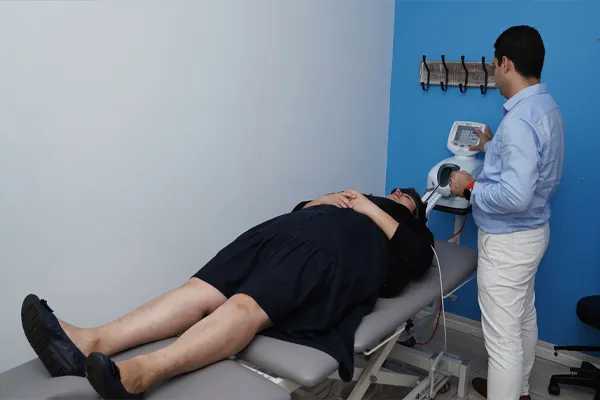
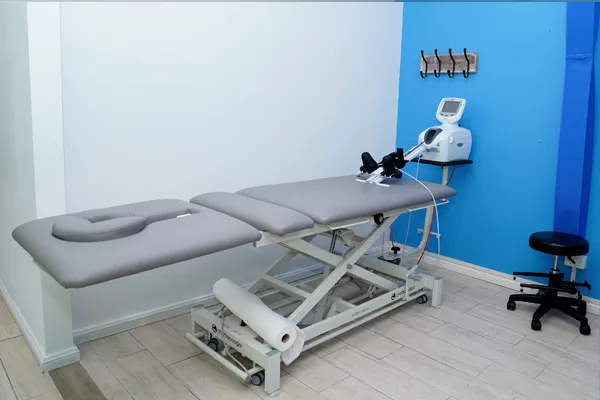
Spinal decompression therapy is a specialised treatment that uses a motorised decompression table to apply a gentle and controlled stretching force to the spine.
Unlike general traction, modern decompression systems are designed to precisely target specific areas of the spine while adjusting the force according to the patient’s condition and tolerance.
During treatment, the spine is gradually and comfortably stretched. This process may help create additional space between vertebrae, reduce pressure on spinal discs, and decrease irritation around spinal nerves.
Many patients find the treatment relaxing and comfortable, with some reporting a reduction in symptoms over the course of their treatment program.
Conditions That May Benefit From Spinal Decompression Therapy
Spinal decompression may be considered for a variety of spinal conditions, including:
Disc Bulges and Disc Protrusions
Disc injuries are one of the most common causes of lower back and neck pain. When a disc becomes irritated or bulges outward, nearby nerves can become compressed, resulting in pain, numbness, or weakness.
Spinal decompression may help reduce mechanical pressure on the affected structures and support the body’s natural recovery process.
Sciatica
Sciatica refers to pain that travels from the lower back into the buttock, leg, or foot due to irritation of the sciatic nerve.
Symptoms may include:
- Sharp pain
- Burning sensations
- Tingling
- Numbness
- Weakness
Many patients with sciatica experience difficulty sitting, driving, or standing for prolonged periods.
Chronic Lower Back Pain
Persistent lower back pain can arise from multiple spinal structures including discs, joints, ligaments, and muscles.
For suitable patients, spinal decompression may form part of a comprehensive treatment plan aimed at reducing pain and improving mobility.
Neck Pain and Cervical Stiffness
Neck pain can significantly affect work, sleep, driving, and daily activities.
Patients experiencing cervical disc irritation, stiffness, or nerve-related symptoms may benefit from cervical decompression programs when clinically appropriate.
Degenerative Disc Changes
Age-related changes within spinal discs are common. While degeneration itself cannot be reversed, treatment may help improve function, reduce pain, and assist patients in maintaining an active lifestyle.
Facet Joint Irritation
Facet joints are small joints located at the back of the spine. When these joints become compressed or irritated, they can contribute to stiffness and pain during movement.
Your Assessment Comes First
Not every patient with back or neck pain is suitable for spinal decompression therapy.
Before commencing treatment, our physiotherapists perform a thorough assessment that may include:
* Medical history review
* Symptom assessment
* Postural evaluation
* Range of motion testing
* Neurological examination
* Strength assessment
* Functional capacity assessment
* Review of imaging findings where available
This allows us to determine whether spinal decompression is appropriate and whether other treatment approaches may also be required.
Spinal Decompression as Part of a Complete Rehabilitation Program
One of the most common mistakes patients make is assuming that a single treatment method will solve a complex spinal condition.
At Merrylands Rehab Centre, we rarely rely on one treatment alone.
Instead, spinal decompression is often combined with:
Physiotherapy
Hands-on physiotherapy may help improve joint mobility, reduce muscle tension, and improve movement patterns.
Exercise Rehabilitation
Exercise remains one of the most important components of long-term spinal health.
Programs may focus on:
- Core strengthening
- Flexibility
- Postural control
- Functional movement
- Return-to-work conditioning
High-Power Laser Therapy
Our clinic utilises advanced high-power laser therapy and MLS robotic laser technology as part of selected rehabilitation programs. These treatments may assist with pain management, inflammation reduction, and tissue healing.
Shockwave Therapy
For patients with associated muscular or tendon-related pain, shockwave therapy may be incorporated into treatment plans where appropriate.
Dry Needling
Dry needling may assist with reducing muscular tension and improving movement in selected patients.
Postural Correction
Poor posture can place ongoing stress on spinal structures. Education and postural retraining often form an important part of long-term recovery.
Our Approach to Back and Neck Pain
We understand that spinal conditions affect every person differently.
Some patients are looking to return to work. Others want to get back to sport, gardening, travelling, or simply enjoying everyday life without constant discomfort.
Our focus is not just on reducing pain but on improving function, mobility, confidence, and overall quality of life.
Treatment plans are tailored to the individual and adjusted according to progress and goals.
Why Choose Merrylands Rehab Centre?
Patients choose our clinic because we combine modern rehabilitation technologies with personalised physiotherapy care.
We offer:
- Comprehensive physiotherapy assessment
- Advanced spinal decompression technology
- High-power laser therapy
- MLS robotic laser therapy
- Shockwave therapy
- Exercise rehabilitation
- Dry needling
- Hydrotherapy
- Individualised treatment programs
- Experienced physiotherapy team
Our goal is to help patients move better, function better, and return to the activities that matter most to them.
Book an Assessment
If you are experiencing persistent back pain, neck pain, sciatica, disc-related symptoms, or ongoing spinal stiffness, our team can assess your condition and determine whether spinal decompression therapy may be appropriate for you.
Contact Merrylands Rehab Centre today to arrange a comprehensive assessment and discuss the treatment options available for your recovery.