

A spinal cord injury (SCI) is a life-altering event that fundamentally affects motor control, sensation, and autonomic bodily functions. Whether resulting from a traumatic event, such as a motor vehicle crash, workplace trauma, or severe fall, or non-traumatic causes like vascular ischemia, spinal tumours, or transverse myelitis, navigating life after an SCI requires specialised, dedicated, and lifelong rehabilitation support.
Following acute surgical intervention and inpatient hospital stabilization, structured community neurological physiotherapy becomes the foundation of functional independence. Specialised spinal cord injury rehabilitation empowers individuals to regain upper and lower limb movement, master essential transfers, optimize wheelchair mobility, prevent secondary health complications, and reintegrate into their local communities.
For individuals and families across Western Sydney and the Hills District, including Parramatta, Merrylands, Granville, Greystanes, Northmead, Baulkham Hills, and Castle Hill—access to experienced neurological physiotherapists ensures the bridge between medical discharge and living an empowered, self-directed life.
Understanding Spinal Cord Injury: Classification and Impact
The effects of a spinal cord injury depend on both the anatomical level of the lesion (Cervical, Thoracic, Lumbar, or Sacral) and whether the lesion is classified as complete or incomplete according to the International Standards for Neurological Classification of Spinal Cord Injury (ISNCSCI / ASIA Impairment Scale):
- Tetraplegia (Quadriplegia): Injuries occurring in the cervical spinal cord (C1 to C8) result in functional loss across both the upper and lower extremities, trunk, and pelvic organs. Therapy focuses heavily on upper limb functional preservation, respiratory conditioning, tenodesis grip training, and assisted mobility.
- Paraplegia: Injuries occurring in the thoracic, lumbar, or sacral segments affect trunk and lower limb mobility while preserving full functional use of the arms and hands. Rehabilitation focuses on dynamic sitting balance, high-level independent transfers, advanced wheelchair skills, and standing or gait retraining where clinically viable.
- Complete vs. Incomplete Injuries: In complete injuries (ASIA A), sensory and motor function are absent in the lowest sacral segments (S4–S5), requiring comprehensive compensatory functional techniques. In incomplete injuries (ASIA B, C, and D), spared descending neural pathways allow for targeted neuroplastic recovery, motor relearning, and variable degrees of walking recovery.
Core Pillars of Spinal Cord Injury Physiotherapy
Rehabilitation following an SCI combines neuroplastic restoration, compensatory skill acquisition, and proactive secondary prevention. A tailored physiotherapy program includes:
1. Functional Transfer and Bed Mobility Retraining
Regaining the ability to roll, sit upright, and transfer safely between a bed, wheelchair, commode, and car is paramount for personal dignity and caregiver ease. Therapists break complex movements down into biomechanical components, teaching head-hips relationships, slide board transfers, and independent lateral transfers.
2. Neuroplastic Gait and Locomotor Training
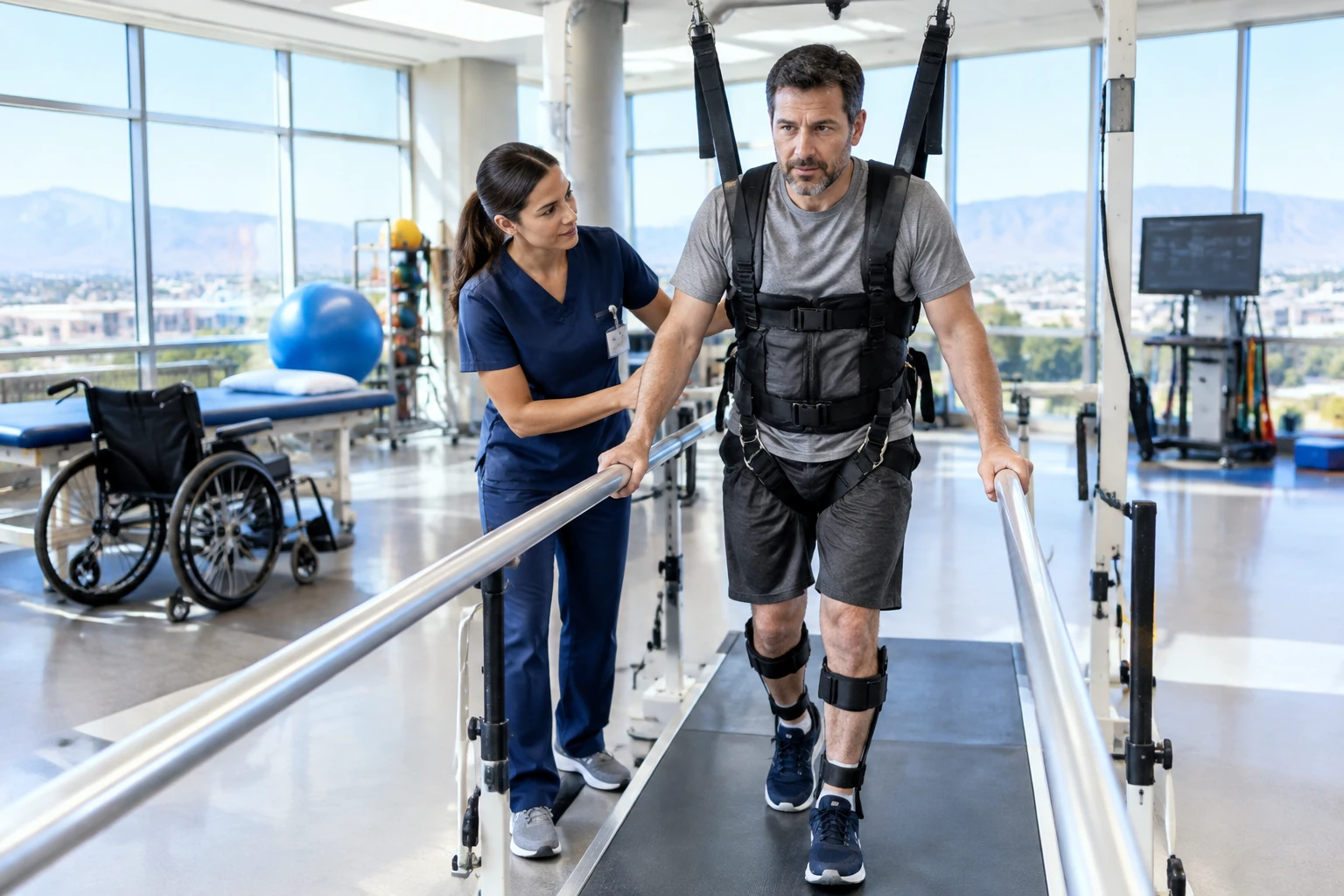
For individuals with incomplete spinal cord lesions (such as Central Cord Syndrome or Brown-Séquard Syndrome), modern neuro-rehabilitation prioritizes high-repetition, task-specific walking protocols. Utilizing body-weight support, overhead harnesses, treadmill walking, and functional electrical stimulation (FES), therapists stimulate spared motor pathways to facilitate stepping, balance, and stance stability.
3. Wheelchair Ergonomics and Advanced Propulsion Skills
A wheelchair is not merely equipment; it is an extension of the individual’s body. Neurological physiotherapists provide expert assessment for manual and power wheelchairs, pressure-relieving cushions, and contoured seating systems. Training encompasses efficient propulsion mechanics to prevent rotator cuff tears, curb mounting, obstacle navigation, and emergency fall recovery.
4. Management of Spasticity, Clonus, and Contractures
Disruption of upper motor neuron pathways often leads to involuntary muscle spasms, elevated resting tone, and severe joint stiffness. Targeted daily passive stretching protocols, prolonged positional weight-bearing (such as standing frame programs), serial casting, and hydrotherapy aid in keeping joints mobile and comfortable while lowering the risk of painful muscle contractures.
5. Respiratory Conditioning and Autonomic Wellness
Injuries at or above mid-thoracic levels can weaken diaphragmatic, intercostal, and abdominal muscle strength, increasing vulnerability to chest infections. Respiratory muscle training, assisted coughing techniques, and posture optimization safeguard pulmonary health. Clinicians also educate patients on managing autonomic dysreflexia (AD), orthostatic hypotension, and skin-preserving pressure relief schedules.
Funding Pathways for Spinal Cord Injury Care in New South Wales
Accessing continuous, specialized care across Sydney is supported by various private and government funding streams:
- NDIS (National Disability Insurance Scheme): For eligible participants under age 65, ongoing physiotherapy is funded under Capacity Building – Improved Daily Living. Physiotherapists also assist with complex Assistive Technology (AT) applications and home modification reports.
- icare NSW (Lifetime Care and Support Scheme): Provides comprehensive, lifetime funding for individuals who have sustained severe, catastrophic spinal cord injuries through motor vehicle accidents or eligible workplace incidents in New South Wales.
- Medicare Chronic Disease Management (EPC): GP-guided Team Care Arrangements provide subsidized access for up to 5 allied health consultations per year to address chronic musculoskeletal issues.
- Private Health Insurance: On-the-spot claims via HICAPS for members of Australian health funds including Bupa, Medibank Private, HCF, NIB, Australian Unity, and Teachers Health.
- Mobile and In-Home Rehabilitation: Recognising the logistical challenges of travelling with a spinal injury, mobile physiotherapists deliver clinic-grade care directly in patients’ homes, supported independent living (SIL) facilities, or community gyms across Western Sydney.
Dedicated SCI Support Across Western Sydney and the Hills District
Achieving long-term independence requires experienced, continuous clinical guidance delivered close to home.
Whether you reside in urban hubs such as Parramatta and Granville, central residential communities like Merrylands and Greystanes, or the Hills District suburbs of Baulkham Hills, Castle Hill, and Northmead, specialised neurological physiotherapy brings evidence-based physical rehabilitation to your front door.
Every treatment journey commences with a comprehensive 60-to-90-minute clinical evaluation: assessing motor levels, sensory maps, joint integrity, pressure injury risk, transfer capability, and personal lifestyle aspirations. Working collaboratively with clients, family members, support coordinators, and icare case managers, our therapists formulate measurable, goal-driven rehabilitation plans.
Frequently Asked Questions
Can someone with an incomplete spinal cord injury walk again?
Many individuals with incomplete injuries (especially ASIA C and D classifications) regain functional ambulatory abilities. The likelihood and speed of recovery depend on the severity of initial spinal shock, the exact neurological level, and the frequency and intensity of task-specific gait training initiated early during recovery.
How often is physiotherapy required following discharge from an inpatient SCI unit?
In the initial months following discharge, 2 to 3 sessions per week are generally recommended to consolidate gains, establish safe home routines, and progress strength. Over time, this may transition into a maintenance and independent home program cadence with regular periodic reviews.
How does physiotherapy prevent pressure injuries?
Physiotherapists assess seating posture, educate clients on regular weight-shift routines (such as forward and lateral leans), recommend specialized cushions (e.g., alternating air or high-immersion foam), and monitor skin contact points to avoid pressure sores over bony prominences like the sacrum and ischial tuberosities.
Can therapy take place in our home or local gym?
Yes. Mobile neuro physiotherapy services visit homes, group homes, and council leisure facilities throughout Parramatta, Merrylands, Castle Hill, and the wider Western Sydney area. Home sessions are particularly valuable for mastering transfers in real-world environments like personal bathrooms, beds, and vehicles.
Take the Next Step in Your Spinal Injury Recovery
Living with a spinal cord injury involves significant challenges, but targeted, knowledgeable physiotherapy can unlock new functional possibilities and restore daily confidence. Whether you require expert clinic-based therapy or convenient in-home rehabilitation in Parramatta, Merrylands, Castle Hill, Baulkham Hills, or surrounding suburbs, dedicated neurological support is ready to partner with you.
Contact our neurological rehabilitation team today to book your initial assessment and discuss your personalized goals.