Neurological Physiotherapy: Recovering from a neurological injury or living with a long-term neurological condition presents unique physical, functional, and emotional challenges. Whether it is regaining the ability to walk after a stroke, managing progressive muscle stiffness from Parkinson’s disease, or rebuilding balance after a brain injury, specialized clinical care is essential.
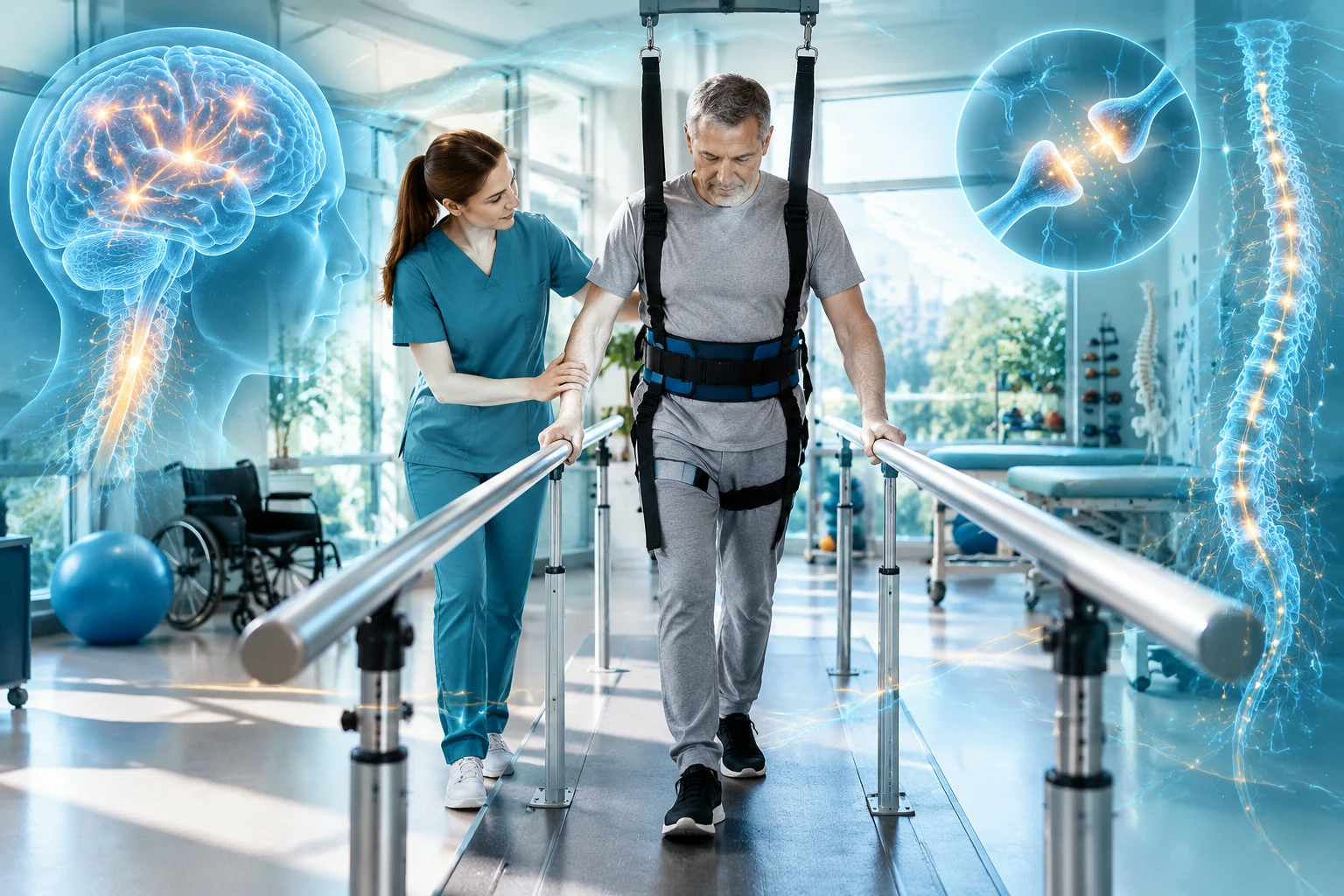
Neurological Physiotherapy (also known as neuro physio) is a dedicated sub-discipline of physiotherapy designed to assess, treat, and rehabilitate individuals with impairments caused by damage to the brain, spinal cord, and central nervous system.
For individuals and families across Western Sydney and the Hills District—including Parramatta, Merrylands, Granville, Greystanes, Northmead, Baulkham Hills, and Castle Hill—access to community-based and clinic-centered neurological rehabilitation provides a clear pathway back to independence and daily confidence.
What is Neurological Physiotherapy?
Unlike standard musculoskeletal physiotherapy, which primarily addresses acute muscle sprains, joint dysfunctions, and tendon tears, neurological physiotherapy focuses on the central and peripheral nervous systems.
When neural pathways are disrupted by trauma, degeneration, or vascular events, communication between the brain and musculoskeletal system breaks down. This often leads to abnormal movement patterns, muscle weakness, spasticity, loss of sensation, and balance deficits.
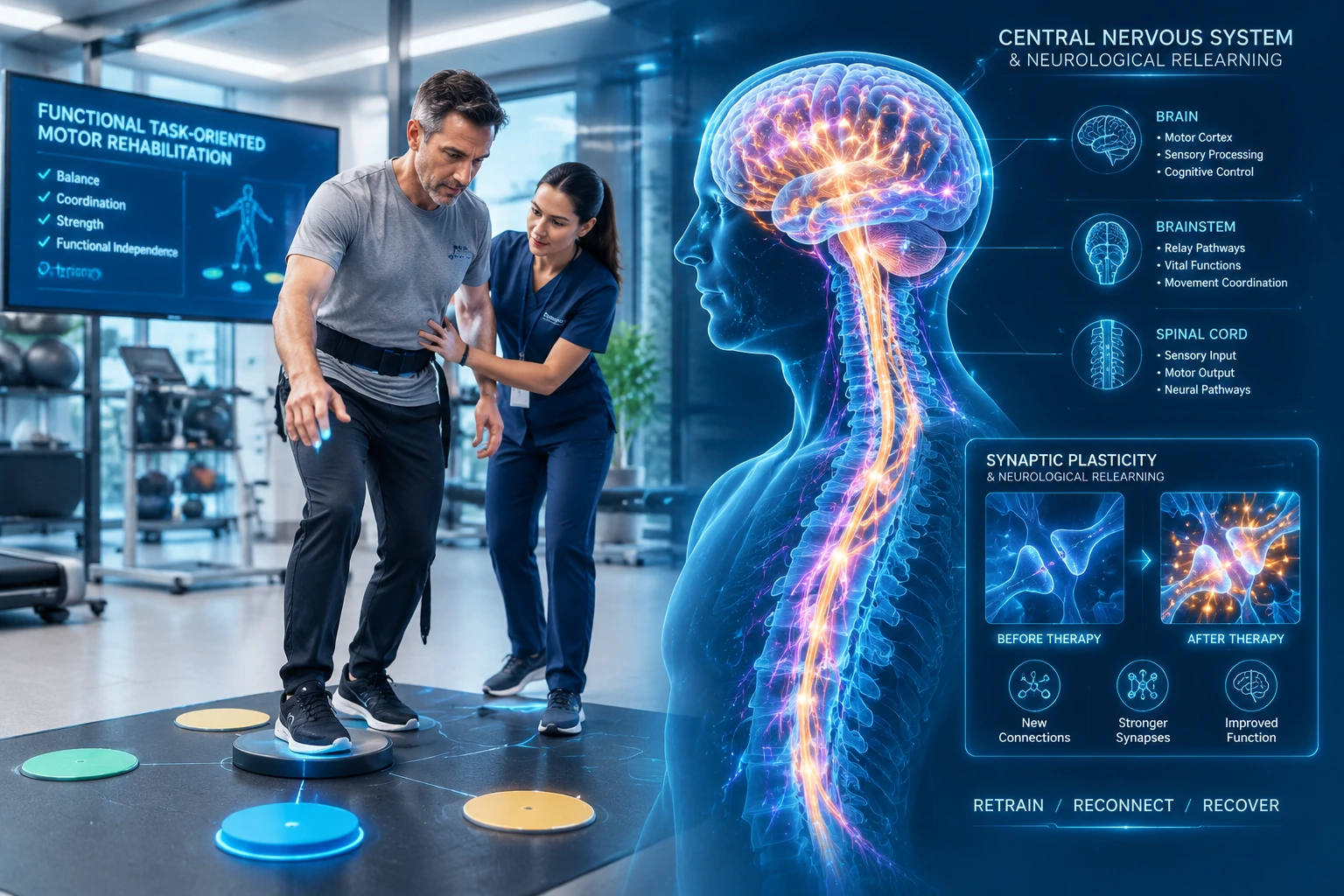
Neurological physiotherapists utilize evidence-based motor relearning principles and high-repetition task-oriented practice to stimulate neuroplasticity—the brain’s remarkable ability to rewire itself, recruit undamaged neural networks, and form new functional connections.
Common Neurological Conditions Treated
Specialized neurological physiotherapy addresses a broad spectrum of acute, chronic, and progressive conditions, including:
Stroke Recovery (Ischaemic and Haemorrhagic): Focused rehabilitation to address hemiplegia (one-sided weakness), gait re-education, upper limb recovery, and spatial neglect.
Parkinson’s Disease: Targeted movement training, large-amplitude movement exercises, cadence control, and fall-prevention strategies.
Multiple Sclerosis (MS): Fatigue management, progressive balance therapy, spasticity reduction, and energy-conservation training.
Traumatic Brain Injury (TBI) and Concussion: Vestibular rehabilitation, dynamic balance retraining, and cognitive-motor integration.
Spinal Cord Injuries (Incomplete and Complete): Postural stability, wheelchair skills, transfer training, and assisted standing/walking therapies.
Peripheral Neuropathies & Guillain-Barré Syndrome: Lower limb sensory retraining, foot drop management, and functional strength conditioning.
Cerebral Palsy (Adolescent and Adult Management): Long-term functional preservation, posture alignment, and contracture prevention.
Pillars of Neurological Rehabilitation
A comprehensive neuro physio program goes beyond passive treatment. It employs intensive, structured strategies to maximize motor recovery:
1. Neuroplasticity and Motor Re-learning
Recovery occurs when neural pathways are stimulated repeatedly in functional contexts. Therapy incorporates targeted, meaningful actions—such as step-ups, sit-to-stands, and reaching tasks—to reinforce proper brain-muscle signaling.
2. Spasticity and Muscle Tone Management
Hypertonicity and spasticity can lead to painful muscle spasms and joint contractures. Clinicians utilize targeted stretching, prolonged positioning, reciprocal inhibition techniques, and coordination with medical specialists for focal spasticity interventions.
3. Gait Analysis and Walking Retraining
Restoring a safe, efficient walking pattern involves advanced gait breakdown. Therapists evaluate stride length, heel strike, cadence, and pelvic symmetry. When necessary, therapists prescribe and fit orthoses, including Ankle-Foot Orthoses (AFOs) and assistive walking devices.
4. Vestibular and Dynamic Balance Training
Falls represent a major risk for neurological patients. Balance rehabilitation challenges the visual, vestibular, and proprioceptive systems in controlled environments to improve reactive stepping and reduce fall anxiety.
5. Upper Limb Functional Restoration
Rebuilding arm and hand function involves gross motor control, fine motor dexterity exercises, bilateral task training, and sensory re-education to restore everyday activities such as eating, writing, and dressing.
Accessing Neurological Physiotherapy: NDIS, Medicare, and Health Funds
In Australia, accessing high-quality neurological care is supported through various healthcare pathways:
- NDIS (National Disability Insurance Scheme): For registered participants, neurological physiotherapy can be funded under Capacity Building – Improved Daily Living. We provide individualized functional assessments, plan reviews, and ongoing therapeutic support.
- Medicare Chronic Disease Management (CDM / EPC Plans): Eligible patients with chronic neurological conditions can receive GP-referred Medicare rebates for up to 5 allied health sessions per calendar year.
- Private Health Insurance: On-the-spot electronic claiming is available through HICAPS for patients with physiotherapy coverage under funds such as Bupa, Medibank, HCF, NIB, and others.
- Home-Based and Community Neuro Physio: For individuals with reduced mobility or transportation barriers, mobile and in-home physiotherapy sessions ensure consistent rehabilitation in the patient’s home environment.
Dedicated Neuro Physiotherapy Across Western Sydney and The Hills
Achieving long-term neurological recovery requires consistent, accessible, and compassionate clinical guidance.
Whether you reside in the central hubs of Parramatta and Granville, nearby residential suburbs like Merrylands and Greystanes, or throughout the northern corridor of Northmead, Baulkham Hills, and Castle Hill, specialized neurological care is tailored directly to your home and clinical needs.
Every rehabilitation journey begins with an in-depth baseline evaluation: assessing muscle tone, motor control, cranial nerve function, postural stability, and functional goals. From there, an evidence-based, milestone-driven rehabilitation plan is established to support you and your family every step of the way.
Frequently Asked Questions
What should I expect during an initial neurological physiotherapy assessment?
Your physiotherapist will conduct an extensive evaluation spanning 60 to 90 minutes. This includes reviewing your medical history, assessing reflex and sensory function, evaluating active movement and muscle tone, analyzing your balance and gait, and setting realistic, client-centered recovery goals.
Is neurological recovery still possible years after a stroke or brain injury?
Yes. While the fastest natural recovery window often occurs in the first 3 to 6 months, research confirms that neuroplasticity continues throughout life. Even months or years post-injury, focused task-specific training can yield significant gains in strength, balance, and independence.
Can neuro physiotherapy be conducted at home?
Yes. Mobile neurological physiotherapy is especially beneficial because it allows clinicians to assess real-life obstacles (such as steps, bed transfers, and bathroom accessibility) and train functional tasks directly within your living environment.
Do I need a doctor’s referral to get started?
Private patients and self-managed or plan-managed NDIS participants do not require a GP referral to begin physiotherapy. However, a referral is required if you are utilizing a Medicare Chronic Disease Management (EPC) plan or accessing support through DVA.
Reclaim Your Movement and Functional Independence
Whether you are recovering from an acute neurological episode or seeking to manage a long-term condition across Parramatta, Merrylands, Baulkham Hills, Castle Hill, or surrounding areas, professional neuro physiotherapy provides the evidence-based structure you need to achieve your goals.
Contact our neurological physiotherapy team today to schedule your comprehensive assessment and take the next step in your rehabilitation journey.