

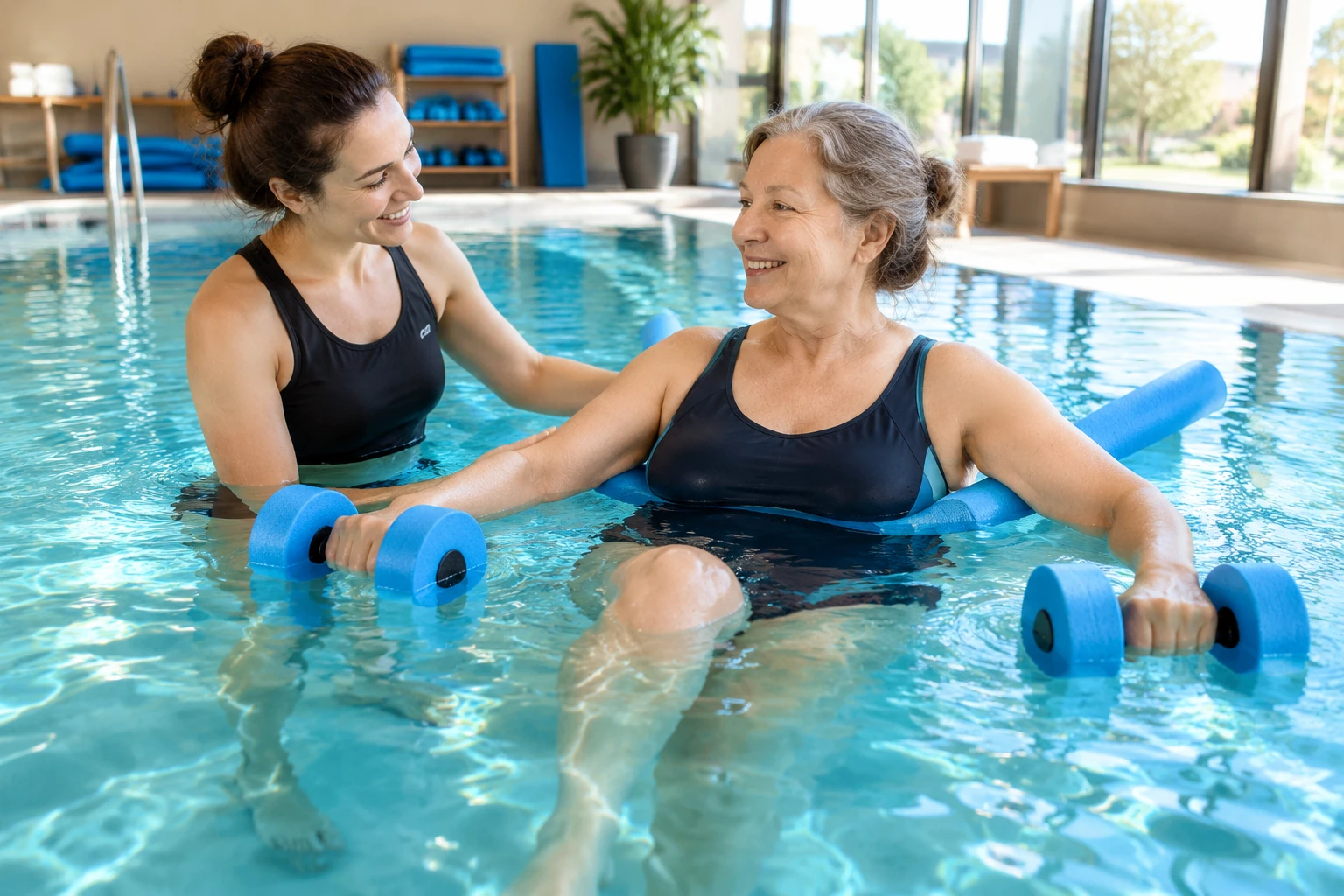
Hydrotherapy for Arthritis : Living with chronic arthritis, whether degenerative Osteoarthritis (OA) or systemic inflammatory conditions like Rheumatoid Arthritis (RA) and Psoriatic Arthritis, often turns everyday movements into a painful ordeal. As joint cartilage thins and intra-articular inflammation persists, traditional land-based weight-bearing exercises can provoke acute symptom flares, discouraging individuals from staying active.
Yet, scientific research consistently confirms that therapeutic movement is essential for cartilage health, joint lubrication, and muscle preservation. This is where hydrotherapy (aquatic physiotherapy) shines. Conducted in purpose-built, heated hydrotherapy pools (typically maintained between 33°C and 35°C) and led directly by registered physiotherapists, aquatic therapy provides a low-impact, highly supportive therapeutic environment where painful joints can unload, move freely, and rebuild functional strength.
For residents across Western Sydney and the Hills District, including Parramatta, Merrylands, Granville, Greystanes, Northmead, Baulkham Hills, and Castle Hill, physiotherapist-led hydrotherapy offers an evidence-based pathway to reduce stiffness, restore mobility, and regain daily independence without aggravating joint pain.
The Biomechanical and Physiological Science of Warm Water Therapy
Hydrotherapy is not simple lap swimming or recreational aqua aerobics; it is a clinical intervention grounded in physics and exercise science. Several unique properties of water work synergistically to alleviate arthritic pain:
1. Buoyancy: Decompressing Weight-Bearing Joints
Archimedes’ principle states that an upward buoyant force counters gravitational load. When immersed to waist depth, the body unloads approximately 50% of its body weight; at chest depth, axial joint loading drops by up to 75% to 85%. This massive reduction in gravitational force immediately relieves compressive stress on arthritic hips, knees, lumbar spine discs, and ankle joints, allowing pain-free active movement that might be impossible on dry land.
2. Therapeutic Thermal Modulation (33°C to 35°C)
Immersing painful joints in water heated to 33°C–35°C induces systemic cutaneous vasodilation, dramatically boosting peripheral blood circulation. This increased blood flow clears inflammatory exudates, speeds up metabolic waste removal, and reduces synovial fluid viscosity. Heat also increases connective tissue extensibility, helping stubborn, tight joint capsules and surrounding tendons to stretch safely and comfortably.
3. Pain Modulation via the Gate Control Mechanism
The continuous sensory bombardment of warm water moving across cutaneous mechanoreceptors effectively “gates” or dampens nociceptive (pain) signals traveling along A-delta and C nerve fibers to the spinal cord and brain. Furthermore, warm-water immersion dampens excess sympathetic nervous system activity, lowering resting muscle spasms and elevating systemic pain thresholds.
4. Hydrostatic Pressure: Decreasing Joint Effusion
As depth increases, water exerts uniform hydrostatic pressure against the submerged limbs. This natural compressive gradient facilitates lymphatic and venous drainage, actively reducing chronic joint effusion (swelling) and peripheral dependent oedema commonly observed in arthritic knees and ankles.
5. Hydrodynamic Viscous Drag: Graded, Safe Muscle Strengthening
Water provides natural multidirectional resistance that is velocity-dependent—the faster a limb moves, the greater the resistance encountered. Unlike land weights which rely on gravitational vectors, aquatic resistance engages stabilizing agonist and antagonist muscle pairs simultaneously without sudden, jarring peak loads, protecting fragile joint surfaces while rebuilding essential muscular stability.
Arthritis Conditions That Benefit Most from Aquatic Physiotherapy
Physiotherapy-led hydrotherapy delivers profound relief across multiple arthritic presentations:
Knee and Hip Osteoarthritis: Unloads worn joint cartilage, enhances synovial fluid distribution, strengthens quadriceps, gluteal, and hamstring stabilizers, and delays or prepares joints for total joint arthroplasty (pre-habilitation).
Spinal Osteoarthritis and Facet Joint Arthropathy: Relieves axial spinal compression, softens paraspinal muscle spasms, and restores lumbar-pelvic dissociation and pain-free trunk rotation.
Rheumatoid Arthritis and Psoriatic Arthritis: During sub-acute phases, warm water relieves chronic morning stiffness, keeps periarticular tissues supple, and safely conditions the cardiovascular system without overworking inflamed synovial linings.
Post-Surgical Joint Replacements: For patients recovering from knee, hip, or shoulder replacements, hydrotherapy offers an exceptionally safe transition to restore gait patterns, knee flexion, and balance weeks before heavy land-based loaded exercises can begin.
Funding Pathways for Hydrotherapy in New South Wales
Accessing structured, physiotherapist-guided hydrotherapy in Sydney is straightforward across various funding arrangements:
- Private Health Insurance: On-the-spot electronic claiming via HICAPS under aquatic physiotherapy consultations (Item 515/516 or standard physio consultations) for members of major funds like Bupa, Medibank, HCF, NIB, Australian Unity, and Teachers Health.
- Medicare Chronic Disease Management (EPC / CDM): Eligible patients with a GP management plan for chronic arthritis can utilize up to 5 allied health rebates per calendar year toward their clinical pool assessments and sessions.
- NDIS (National Disability Insurance Scheme): For self-managed, plan-managed, or agency-managed participants where arthritis severely impacts mobility and daily participation, hydrotherapy is funded under Capacity Building – Improved Daily Living.
- Department of Veterans’ Affairs (DVA): Gold Card and eligible White Card holders receive fully covered aquatic physiotherapy sessions with an appropriate GP referral (D904).
- WorkCover NSW & icare CTP: Fully funded aquatic rehabilitation programs for workers and injured drivers returning from traumatic joint injuries and secondary post-traumatic osteoarthritis.
Targeted Arthritis Hydrotherapy Across Western Sydney & The Hills
Accessing high-quality aquatic therapy shouldn’t mean traveling across the entire city.
Whether you are located in the bustling center of Parramatta or neighboring Granville, residential hubs like Merrylands and Greystanes, or the northern precincts of Northmead, Baulkham Hills, and Castle Hill, our hydrotherapy services link you directly with temperature-controlled therapeutic pools and experienced musculoskeletal physiotherapists.
Every clinical program starts with a detailed dry-land evaluation in the clinic: assessing joint range of motion, muscle strength, baseline pain levels, skin integrity, and cardiovascular suitability. Your physiotherapist then designs a progressive, personalized pool exercise routine—working with you one-on-one or within small, supportive clinical aquatic groups.
Frequently Asked Questions
Do I need to know how to swim to attend hydrotherapy?
No, swimming ability is not required. Hydrotherapy pools are designed for therapeutic exercise and are typically shallow enough to stand comfortably with feet firmly on the ground. Handrails, supportive pool steps, hoists, and aquatic floatation aids (such as buoyancy belts, noodles, and kickboards) are utilized to ensure complete safety and comfort at all times.
What should I bring to my first hydrotherapy session?
Please bring comfortable swimwear or clean water-appropriate exercise clothes (such as a rash vest and swim shorts), a towel, slip-resistant pool shoes or thongs, any prescribed emergency medications (such as asthma inhalers or angina sprays), and a bottle of drinking water to stay hydrated.
How is clinical hydrotherapy different from public aqua aerobics?
Public aqua aerobics classes are typically held in standard recreational pools (27°C–29°C), which are too cool for arthritic joints and can provoke muscle shivering and joint stiffness. Hydrotherapy pools are maintained at a therapeutic 33°C–35°C. Crucially, hydrotherapy is prescribed, monitored, and progressed directly by an AHPRA-registered physiotherapist targeting your individual clinical pathology, joint mechanics, and medical history.
Is hydrotherapy safe if I have high blood pressure or heart conditions?
In most cases, yes, though precautions apply. Hydrostatic pressure gently increases venous return to the heart, which is why your physiotherapist will conduct a mandatory land-based screening prior to your first pool session. If you have unstable hypertension, uncontrolled cardiovascular conditions, open wounds, or active infections, medical clearance from your GP will be coordinated first.
Take the First Step Toward Pain-Free Movement
Arthritis does not have to dictate what you can or cannot do. In the warm, weightless support of a hydrotherapy pool, you can discover a renewed sense of mobility, build meaningful strength, and alleviate chronic daily ache.
Whether you reside in Parramatta, Merrylands, Castle Hill, Baulkham Hills, or surrounding Western Sydney suburbs, our dedicated physiotherapy team is here to guide your recovery every step of the way.
Contact our clinic today to book your initial clinical assessment and experience the life-changing benefits of hydrotherapy for arthritis.