
A traumatic brain injury (TBI) whether sustained through a motor vehicle collision, a workplace incident, a sporting accident, or a severe fall can suddenly and profoundly alter daily life. The physical, vestibular, and cognitive fallout often leaves survivors and their families navigating complex recovery pathways.
Beyond acute hospital stabilization, specialized neurological rehabilitation is the cornerstone of long-term functional recovery. Traumatic Brain Injury Physiotherapy focuses on restoring motor function, re-training dynamic balance, alleviating chronic post-concussion symptoms, and rebuilding functional independence.
For individuals and families across Western Sydney and the Hills District , including Parramatta, Merrylands, Granville, Greystanes, Northmead, Baulkham Hills, and Castle Hill , accessing structured, multidisciplinary neuro-rehabilitation bridges the vital gap between hospital discharge and returning to meaningful community life.
Understanding Traumatic Brain Injury
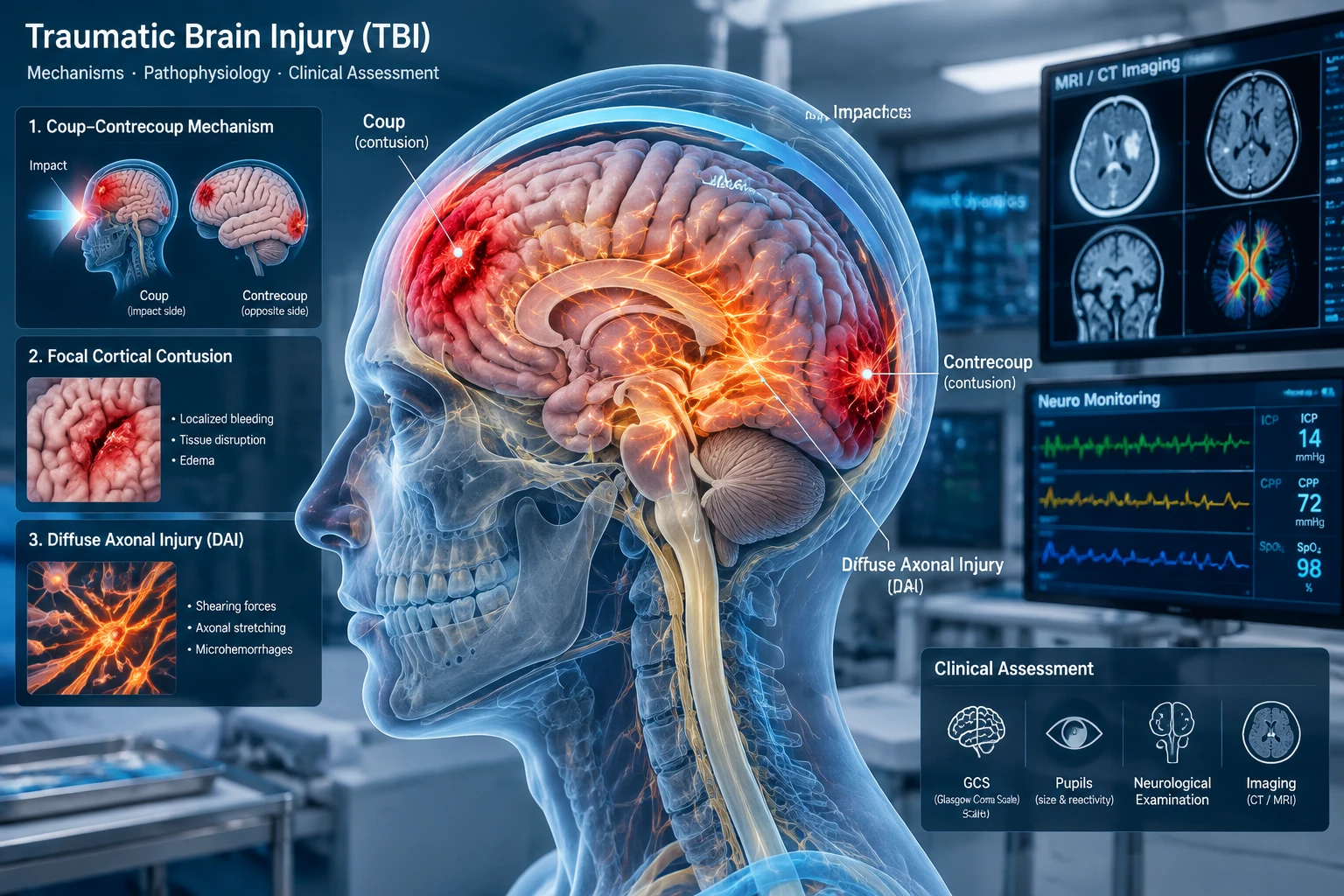
A TBI occurs when an external mechanical force causes disruption to normal brain function. Depending on the severity and mechanism of the impact, injuries range along a broad spectrum:
- Mild TBI / Concussion: Often without structural lesions on standard CT or MRI scans, but presenting with persistent dizziness, light sensitivity, visual tracking deficits, and balance impairments.
- Moderate to Severe TBI: Typically involves contusions, diffuse axonal injury (DAI), or intracranial haemorrhage, leading to complex physical impairments such as hemiparesis, severe spasticity, ataxia, and loss of postural control.
Because no two brain injuries are identical, an effective rehabilitation plan cannot rely on a generic routine. It demands an individualized clinical assessment targeting each patient’s specific neuro-muscular deficits.
Key Pillars of TBI Physiotherapy Rehabilitation
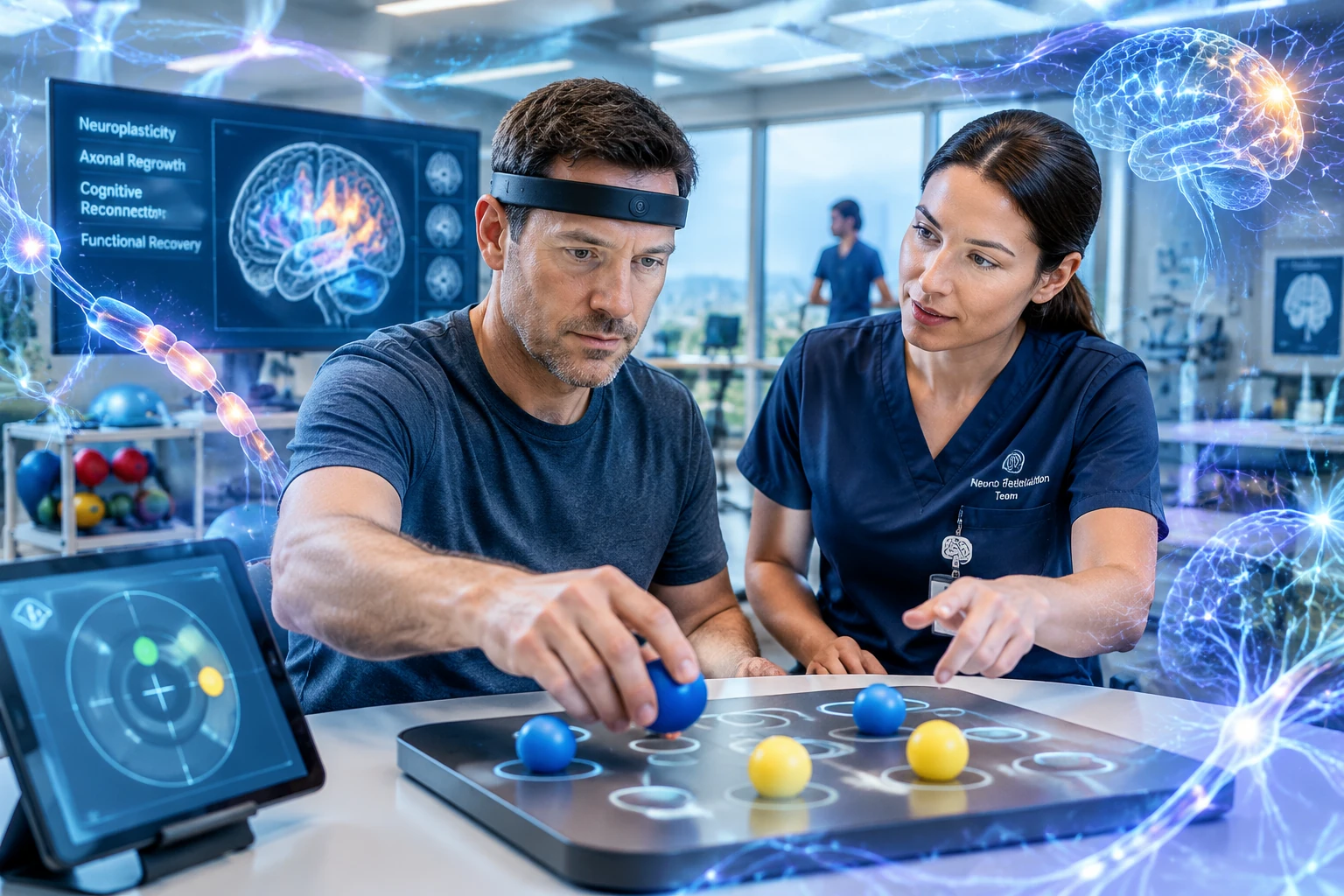
Recovery following a brain injury hinges on neuroplasticity, the central nervous system’s capacity to remodel neural pathways in response to targeted, repetitive, and task-specific stimulus. Clinical rehabilitation incorporates several essential pillars:
1. Vestibular and Oculomotor Retraining
Dizziness, vertigo, and visual disturbances are remarkably common following head trauma due to disruption of the inner ear balance organs or central vestibular pathways. Targeted vestibular rehabilitation utilizes gaze stabilization exercises, habituation protocols, and canalith repositioning to resolve dizziness and motion sensitivity.
2. High-Level Balance and Dynamic Postural Control
Regaining static and dynamic balance is critical for preventing secondary falls. Therapy progressively challenges the body’s visual, somatosensory, and vestibular systems across varied terrains, dual-task paradigms (such as walking while problem-solving), and reactive stepping drills.
3. Motor Re-Learning and Gait Retraining
Following moderate-to-severe TBI, patients often face altered gait patterns, foot drop, or asymmetrical weight-bearing. Physiotherapists evaluate every phase of walking, utilizing body-weight supported treadmill training, overground functional walking drills, and orthotic prescription (such as Ankle-Foot Orthoses) to achieve safe, energy-efficient mobility.
4. Spasticity Management and Contracture Prevention
Elevated muscle tone, spasticity, and joint stiffness can severely limit range of motion and cause pain. Intervention includes serial casting, prolonged stretching, hydrotherapy referrals, and close coordination with rehabilitation physicians for botulinum toxin management.
5. Fatigue Management and Graded Aerobic Conditioning
Post-TBI neuro-fatigue is physically and mentally debilitating. A carefully calculated, sub-symptom threshold aerobic conditioning program gradually expands physical tolerance without provoking symptom flare-ups.
Funding Pathways for TBI Care in New South Wales
Navigating rehabilitation funding across Sydney involves several accessible pathways:
NDIS (National Disability Insurance Scheme): For eligible participants, ongoing neurological physiotherapy is covered under Capacity Building – Improved Daily Living.
icare (Lifetime Care and Support Scheme NSW): Provides comprehensive, lifetime funding for individuals who have sustained catastrophic brain injuries in motor vehicle or workplace accidents across NSW.
Medicare Chronic Disease Management (EPC): Offers GP-referred rebates for up to 5 allied health consultations per year for chronic symptom management.
Private Health Insurance: On-the-spot electronic claiming via HICAPS with providers including Bupa, Medibank, HCF, NIB, and Teachers Health.
In-Home and Community Rehabilitation: For individuals unable to travel to a clinic, mobile physiotherapy allows assessment and treatment directly in home, school, or community settings.
Compassionate TBI Care Across Western Sydney & The Hills
Achieving lasting milestones requires consistent clinical support close to where you live.
Whether you reside in the central corridors of Parramatta and Granville, residential hubs like Merrylands and Greystanes, or the northern districts of Northmead, Baulkham Hills, and Castle Hill, specialized neurological physiotherapy brings structured, evidence-based care directly to your recovery journey.
Every treatment journey starts with a thorough 60-to-90-minute initial evaluation: assessing balance, cranial nerves, joint mobility, muscle tone, and functional gait. Working hand-in-hand with participants, families, support coordinators, and case managers, clinicians outline practical, milestone-driven rehabilitation goals.
Frequently Asked Questions
How long after a traumatic brain injury can improvements still occur?
While the most rapid spontaneous recovery is observed within the initial 6 to 12 months, neuroplastic adaptations continue for years. Patients who engage in focused, task-specific training long after their acute injury regularly demonstrate meaningful improvements in walking speed, balance, and day-to-day independence.
What is the difference between general physio and neuro physio for TBI?
General physiotherapy primarily addresses localized muscle tears, joint stiffness, and sports injuries. Neurological physiotherapy requires advanced training in central nervous system function, motor relearning principles, vestibular compensation, and the complex interplay between physical movement and cognitive fatigue.
Can therapy be coordinated with my NDIS Support Coordinator or icare Case Manager?
Yes. Neurological physiotherapists routinely collaborate with support coordinators, icare case managers, occupational therapists, speech pathologists, and neuropsychologists. Detailed functional progress reports and assistive technology recommendations are provided to support plan reviews.
What should a patient bring to their first assessment?
Please bring relevant discharge summaries, hospital neuroimaging reports (CT/MRI scans), a list of current medications, any orthotic braces or mobility aids currently used, and details of your funding pathway (NDIS number, icare claim details, or private health card).
Take the Next Step in Brain Injury Recovery
Living with the effects of a traumatic brain injury is challenging, but you do not have to walk the road alone. Whether you require clinic-based treatment or mobile therapy in Parramatta, Merrylands, Castle Hill, Baulkham Hills, or surrounding suburbs, dedicated neurological rehabilitation is here to help you rebuild your capabilities.
Contact our neurological rehabilitation team today to schedule an initial consultation and start your personalized recovery journey.